

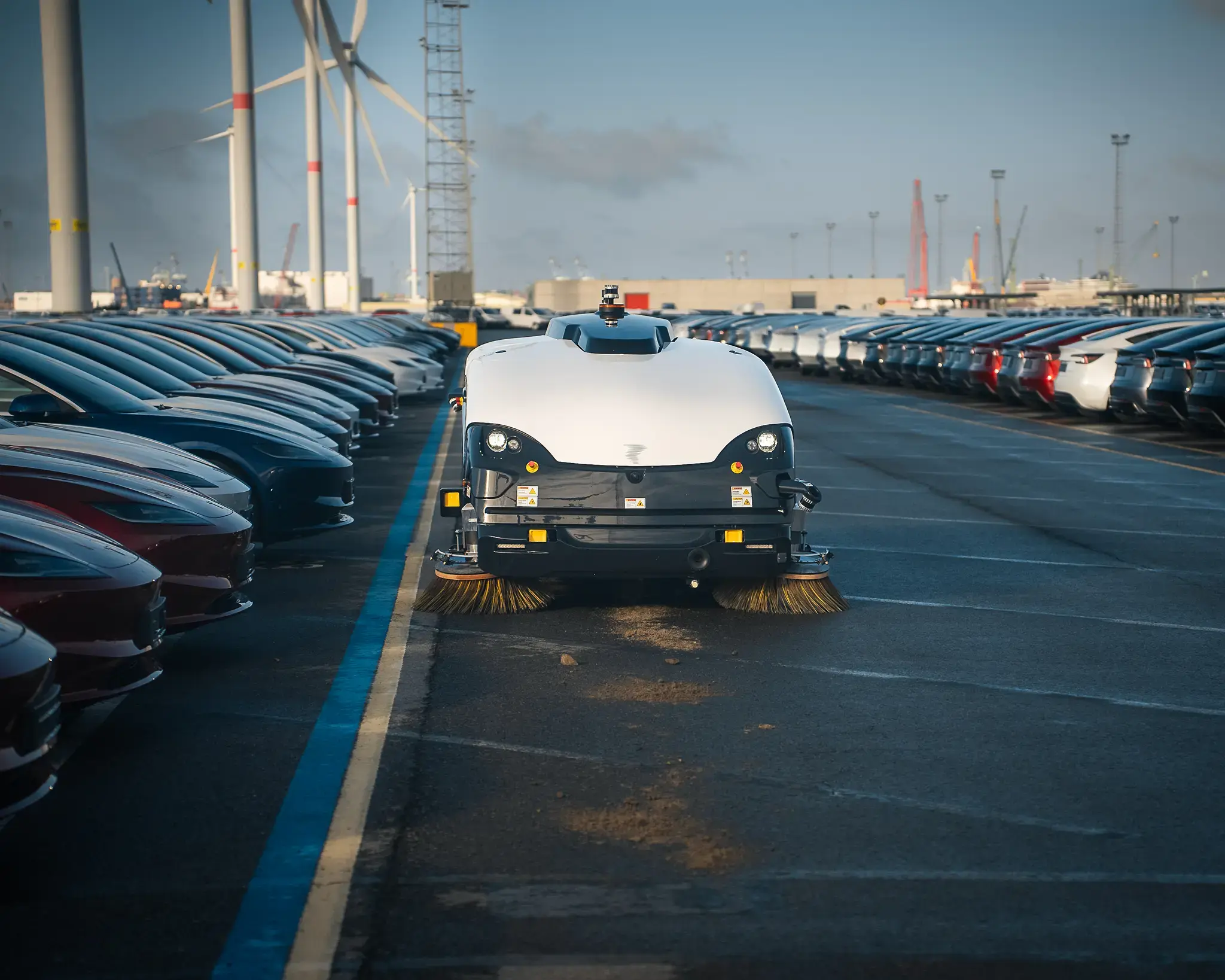
Every paved surface carries the imprint of movement. Traffic, weather, and industry all leave material traces behind. Sophisticated machines are engineered to manage that residue, but how does a road sweeper work in practice?
In Northern climates, the lived realities of winter sanding, freeze–thaw cycles, and heavy logistics traffic lead to considerable material buildup on paved surfaces. Fine road dust, sand, and milling debris accumulate rapidly, presenting challenges for surface integrity and operational efficiency. In controlled research, advanced sweeping technologies were shown to reduce the total mass of road dust — including fine particles produced by traffic and wear — by about 76 % compared with unswept surfaces.
Modern road sweeper machines integrate brush systems, controlled airflow, and debris containment to manage these conditions consistently. Understanding how a road sweeper works means examining how these core systems operate in demanding, real-world environments.
The Where and Why
Road sweepers are used wherever debris builds up faster than it can be cleared by drainage or manual cleaning.
In urban environments, sweeping reduces fine particulate matter that would otherwise become airborne through traffic movement. In Nordic regions, seasonal cycles play a major role: winter sanding, snow removal residue, and spring clean-up after thaw create heavy material loads on streets and public areas. During night frost conditions, dry sweeping solutions may be required where water use is limited.
In industrial settings including quarries, ports, manufacturing sites, and military areas, sweeping serves a different but equally critical function. Fine dust such as silica can accumulate rapidly, affecting both worker safety and how machinery performs. Here, road sweepers help maintain compliance with environmental and occupational standards while supporting operational continuity.
The purpose of a sweeper is therefore twofold: visible surface cleaning and long-term dust management.
From Brush to Hopper: Systems at Work
Although designs vary, most industrial road sweepers rely on the same core systems:
Mechanical Brush system
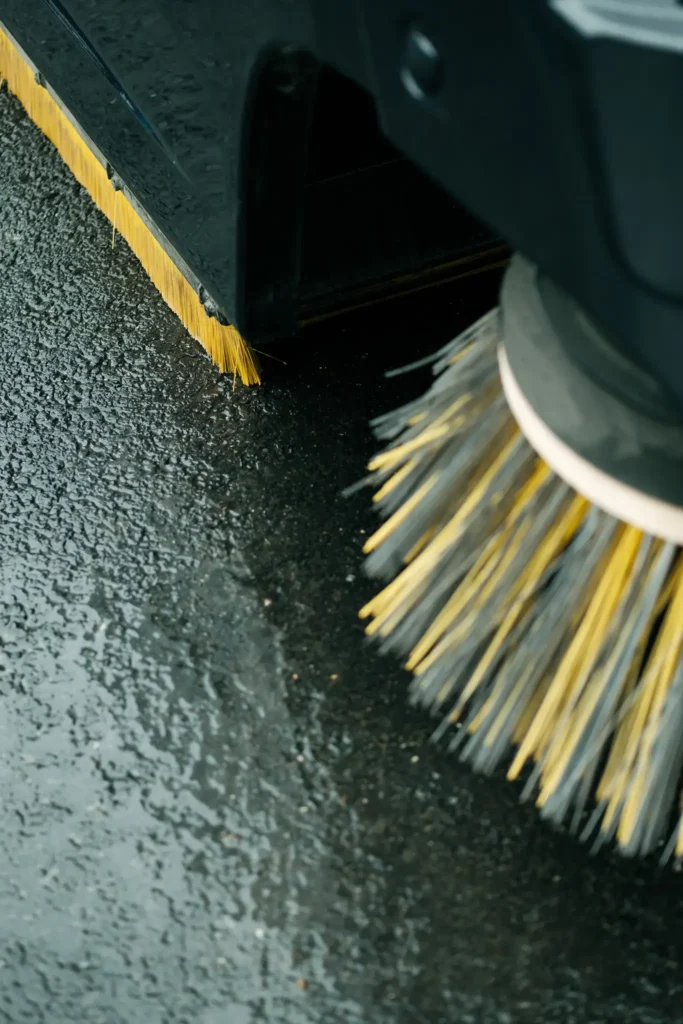
Rotating side and main brushes loosen debris from the surface. Side brushes guide material inward, while the central brush transfers loosened debris toward the collection path. Brush pressure and rotation speed influence cleaning performance across different surface types.
Airflow or suction system
Vacuum or regenerative air systems create controlled airflow that lifts fine particles from the pavement. In high-dust environments, though, it isn’t enough to simply lift the dust. The dust needs somewhere to go; it has to be contained., otherwise it simply settles back on the surface.
Mechanical transfer system
In mechanical sweepers, conveyors transport heavier debris into the hopper. This approach is particularly effective for gravel, milling residue, and compacted material.
Debris hopper
Collected material is stored in an onboard hopper designed for secure containment and controlled unloading.
Filtration system
Filters separate fine dust from the airflow before air is released. Effective filtration reduces secondary emissions and improves air quality during operation.
Together, these components form a continuous cleaning cycle designed for containment, efficiency, and repeatability.
Beyond Traditional Filtration Systems
Most sweepers rely on a combination of brushes, airflow, and filtration to collect and contain debris. In environments where space, terrain, or seasonal variation shape operations, attachment-based sweepers offer more flexibility. Rather than introducing a separate vehicle, sweeping technology can be mounted onto existing carriers.
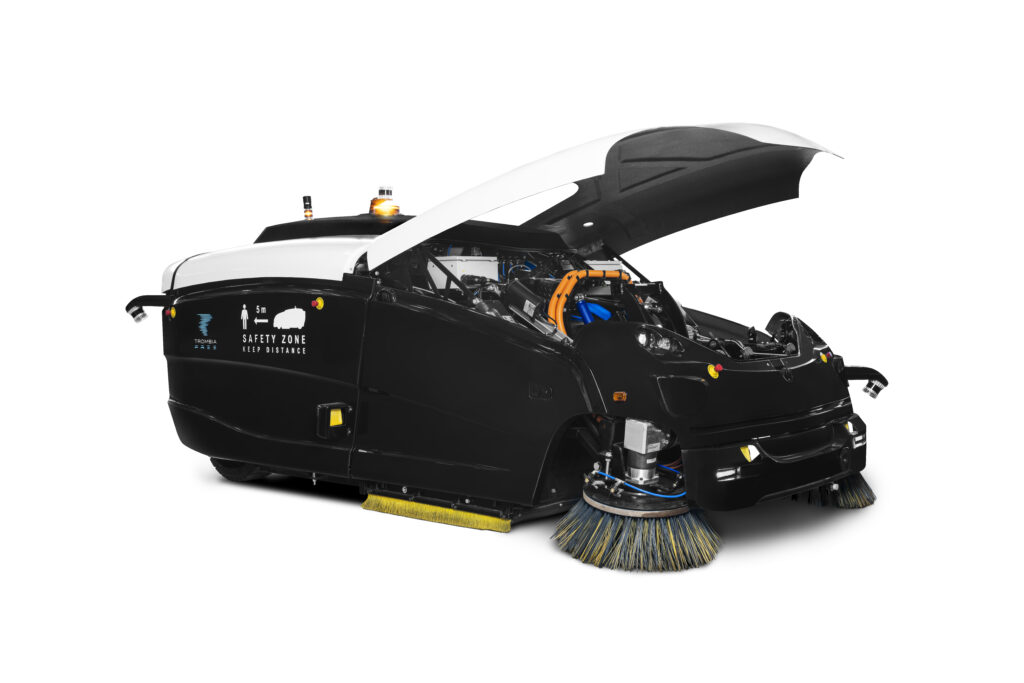
Trombia builds on this approach with its Airknife-based system combining mechanical sweeping with directed airflow and cyclone dust separation instead of traditional filter-heavy designs. This allows the sweeper to handle both fine particles, such as PM2.5 and silica dust, and heavier materials like sand or milling residue within the same pass. As an attachment, it can be mounted onto existing wheel loaders, using their hydraulic power rather than requiring a dedicated vehicle. This makes it particularly suited to operators who need both flexibility and high-capacity sweeping across varied site conditions, with simpler maintenance all-round.
The Cleaning Process, Step by Step
At its core, understanding how a road sweeper works requires breaking the process down into its main components and operational steps:
- Surface agitation
As the sweeper moves forward, rotating brushes loosen debris bonded to the pavement. - Material consolidation
Side brushes direct debris into the machine’s central cleaning path. - Collection
Depending on the sweeper type, debris is lifted mechanically via conveyor or drawn upward using negative air pressure. - Dust separation
Airflow systems pass through filters that capture fine particulate matter. - Containment and discharge
Material is stored in the hopper until it is safely discharged at a designated site.
This step-by-step system allows continuous sweeping across large surface areas while maintaining controlled dust levels.
Sweeping Technologies Compared
No single approach suits every surface or setting. Over time, technologies have evolved to meet the demands of different environments. Types of industrial road sweepers include:
Mechanical sweepers
Use rotating brushes and conveyors to physically lift debris. These are well suited to heavier material such as gravel, sand, and milling residue.
Vacuum sweepers
Primarily rely on suction systems to collect lighter debris and fine dust. They are effective in urban settings where particulate matter control is important.
Regenerative air sweepers
Use a closed-loop airflow system that blasts air onto the surface and immediately recovers it, lifting debris while maintaining strong dust control performance. Vacuum-assisted and regenerative-air sweepers have been shown in studies to outperform mechanical broom sweepers in capturing finer sediment particles.
Trombia technology
Uses directed airflow (“airknife”), mechanical brushing, and cyclone separation to lift and contain dust. This approach reduces reliance on traditional filters and simplifies maintenance while maintaining strong dust control performance.
Configurations: electric, attachment-based, and autonomous sweepers
Sweeper technology is not only defined by how debris is collected, but also by how the machine is powered and used in practice.
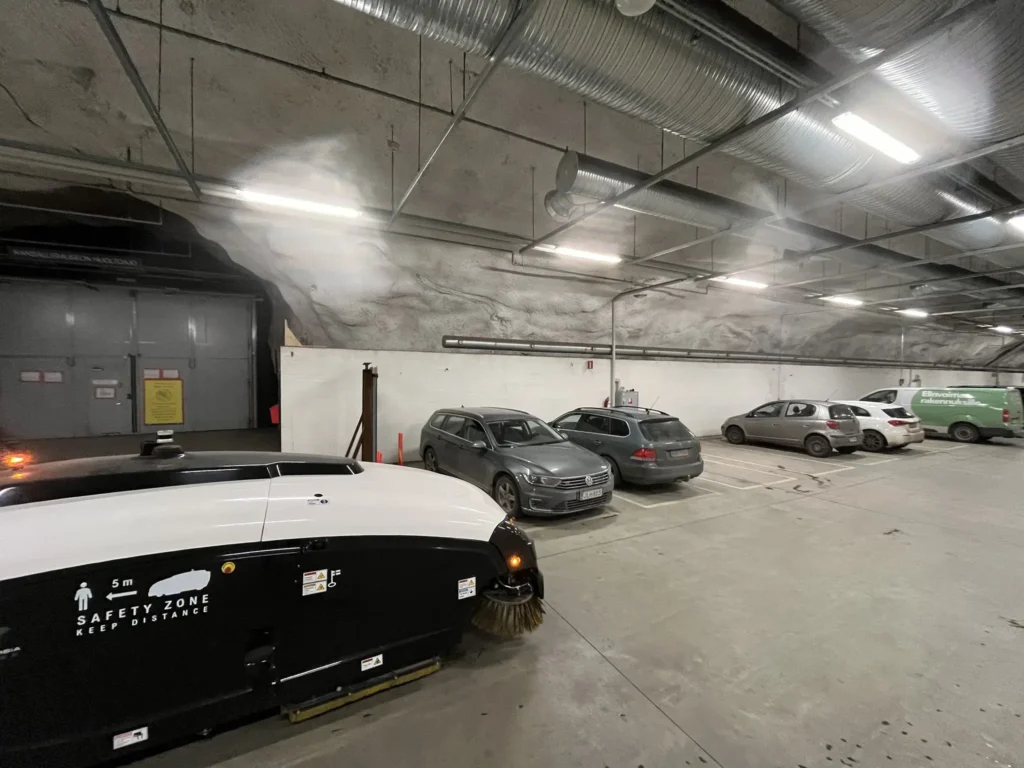
Electric sweepers bring a noticeable shift on site: fewer emissions, less noise, and the ability to operate in places where traditional machines would struggle, such as enclosed or urban environments. Attachment-based systems move in a different direction, offering flexibility by mounting onto existing loaders rather than introducing a separate vehicle.
Automation adds another layer. In places where routes are predictable (logistic hubs, ports, or industrial sites) machines can run repeatedly across the same paths, delivering consistent cleaning over longer periods with less manual input.
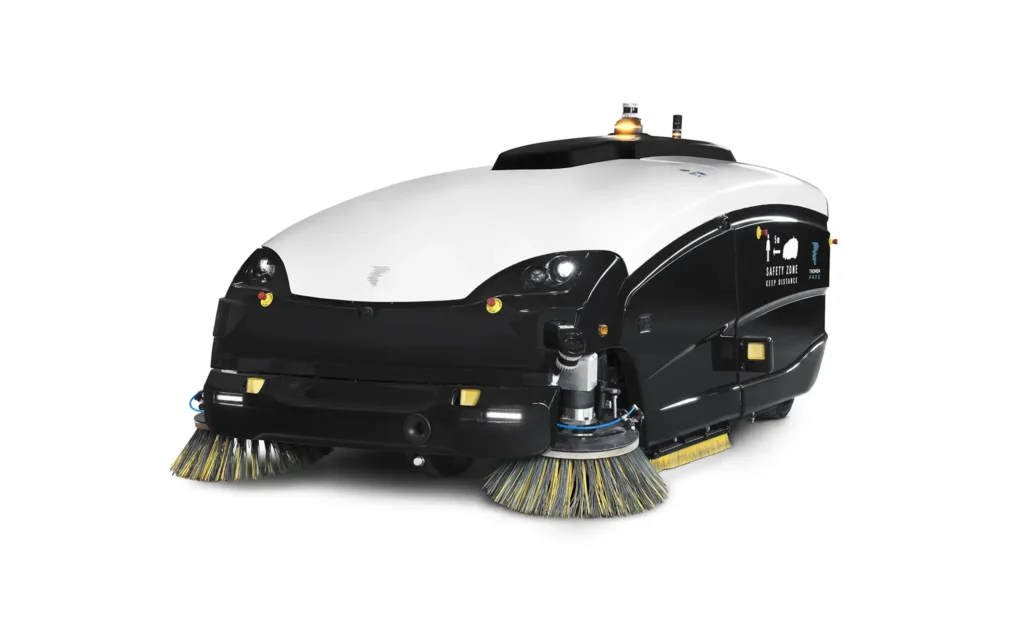
The development of high-power autonomous sweepers signals a broader shift in surface maintenance; towards quieter, lower-emission machines that can operate for longer periods with less manual input.
On Performance: Surface, Speed, and Season
Even the most advanced road sweeper is influenced by real-world conditions, such as:
Operating speed
Higher speeds reduce debris pickup efficiency.
Surface condition
Rough or damaged pavement requires adjusted brush settings.
Debris characteristics
Fine silica dust behaves differently from coarse sand or gravel.
Weather conditions
Wind, moisture, and frost influence dust suppression and material handling.
Maintenance practices
Worn brushes, blocked filters, or insufficient system checks reduce performance and increase emissions. Regular maintenance of brushes, filters, and airflow systems ensures that the sweeper continues to operate within its designed performance parameters.
In regions with strong seasonal variation, such as Northern Europe, sweeping strategies often adapt throughout the year: from winter sanding recovery to autumnal clean-up cycles.
Bringing the System Together
Ultimately, a modern road sweeper machine is not a single-function device, but a coordinated cleaning system. How a road sweeper works is less about a single mechanism and more about coordination: brush systems, airflow management, filtration, and containment working together as one integrated system. In both urban and industrial environments, effective sweeping highly depends on that balance.
Practical Questions about Road Sweepers
How do road sweepers control dust during operation?
Most road sweepers control dust using water. A light spray binds fine particles to keep them from becoming airborne during cleaning. In many systems, airflow is then used to lift the material, with filters separating dust before air is released. Trombia approaches this differently. Instead of relying on traditional filters, it combines a cyclone separator with a fine water mist, reducing maintenance while still controlling dust effectively.
Can road sweepers pick up fine particles and sand effectively?
Yes — particularly vacuum and Airknife (Trombia technology) sweepers. These systems are designed to capture fine particles such as sand and silica dust by combining surface agitation with controlled suction. Performance, however, depends on correct brush settings and regular maintenance.
How often do road sweepers need maintenance to work properly?
Maintenance intervals depend on the operating environment. In high-dust industrial settings, brushes, filters, and airflow systems all may require more frequent inspection and cleaning. Regular maintenance preserves suction efficiency, reduces emissions, and ensures consistent debris collection over time.
What is the difference between mechanical and regenerative air sweepers?
Whilst mechanical sweepers rely on brushes and conveyors to physically transfer debris, regenerative air sweepers use high-velocity airflow to loosen and recover such debris with enhanced dust control. This closed-loop system typically provides stronger control over fine dust.
Are autonomous road sweepers suitable for urban environments?
Autonomous sweepers tend to perform best where the route is predictable — places like ports, industrial yards or logistics hubs. In open city streets, it’s less straightforward. Traffic, pedestrians, and local regulations all influence how far automation can realistically go.

