

Introduction
Most cleaning processes are built around intervals. A shift ends, a driver takes a machine through a site, and the ground is cleared before everything resumes — traffic, movement, the gradual return of material under tyres and air.
For a while, that holds. Then there are places where it doesn’t. A recycling yard that never really settles, a logistics hub moving through the night, a residential street that needs to be maintained early in the morning without disturbing the people who live there.
In these settings, the time between cleaning passes can be measured sensorially — in the way dust returns to the air, in the low, continuous sound of machinery, in how the condition of a place is held over the course of a day. These are small shifts, but they are threaded into the fabric of how a site is experienced, both by the people working within it and those moving around it.
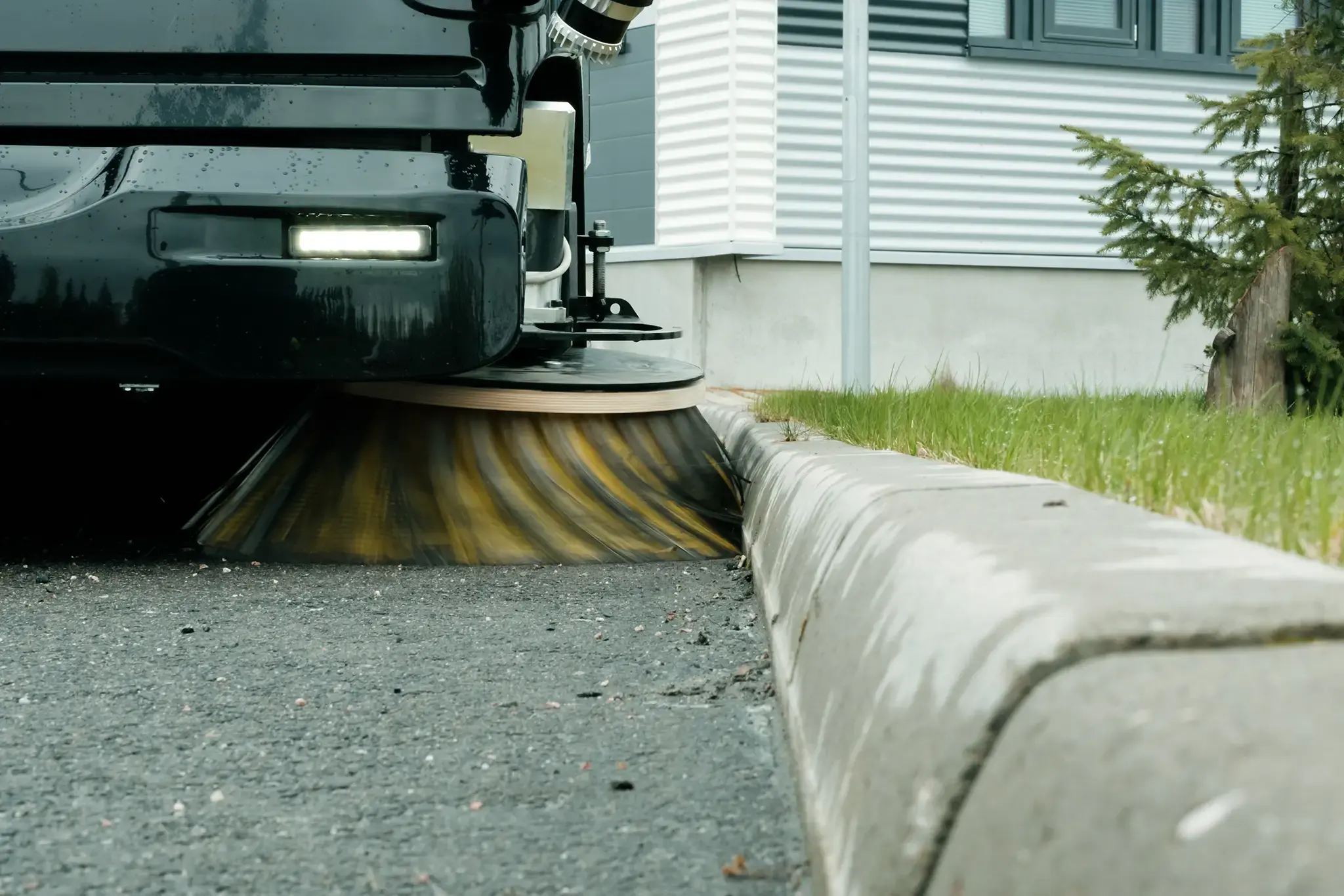
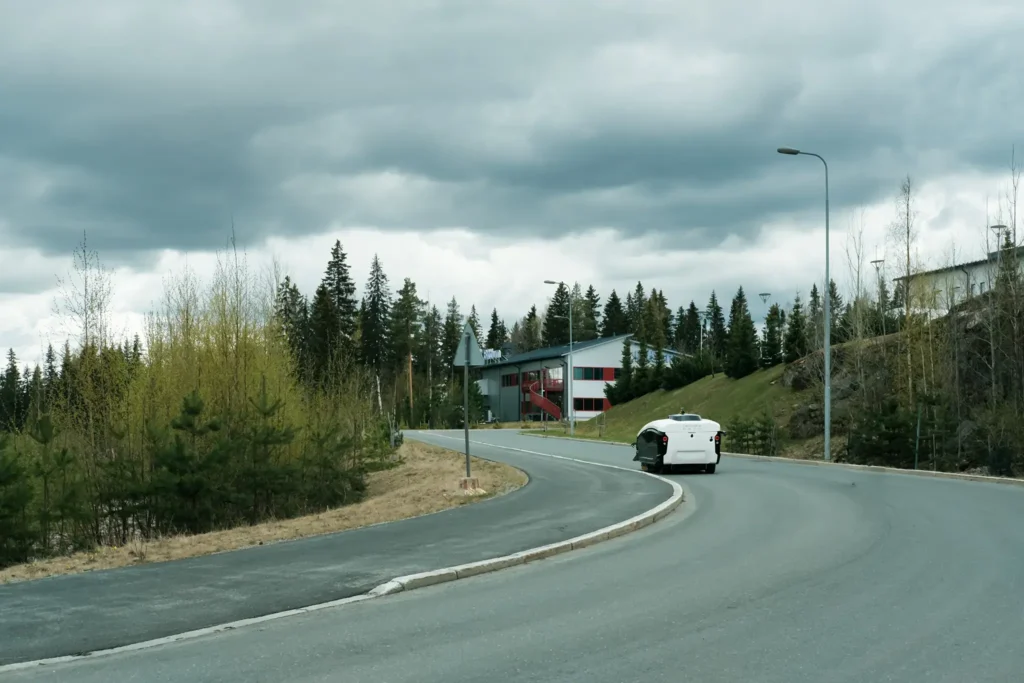
You may well have seen it already, or something close to it: a machine moving steadily through a space on its own, following a route that has already been set, returning to the same edges and corners without waiting to be sent out again, its presence folding into the wider rhythm of the place.
This is where the difference between a traditional industrial manual sweeper and autonomous street sweepers like Trombia Free becomes clearest. Across both municipal and industrial environments, that difference carries measurable weight. Read on to find out why.
Performance Comparison
Performance tends to reveal itself over time, in how a space holds together across the day rather than in a single pass. In active environments, material doesn’t stay put; it lifts under movement, drifts, settles again in edges and seams, returning in small increments that gradually reshape the surface.
That rhythm places pressure on the idea of a “one-off” clean. A road sweeper machine can clear an area effectively in the moment, but the condition it leaves behind is already beginning to worsen.
What changes with systems like Trombia Free is the pattern of return. Instead of waiting for a new cycle to begin, the same routes are revisited steadily, folding cleaning back into the flow of the site rather than stepping in and out of it.
The practical effect of these solutions becomes visible quite quickly:
- Up to 10× faster area cleaning
- Coverage of up to 30,000 m² per charge
- Energy use at roughly 15% of heavy suction-based sweeping technologies
- Route-based operation that keeps high-traffic zones in check throughout the day
Taken together, these figures paint a portrait of how efficiency is felt on the ground. Less swing between clean and wild, fewer moments where conditions need to be reset, and a steadier hold across the surface as everything else continues to move through it.
Ease of Use & Maintenance
Operating a traditional industrial manual sweeper is as much about presence as it is about machinery. It requires time on the cleaning site, repeated routes, and constant adjustment to changing conditions like wind, snow and ice, often across long shifts or in less predictable circumstances. So what’s the solution?
Autonomous systems begin to absorb some of that variability. With Trombia technology, the environment is mapped once and routes are defined in advance, allowing the cleaning itself to follow a pattern that does not rely on continuous manual input and repetitive setup times. Sweeper maintenance is required, but the time and ease overall compared to traditional road sweepers is minimised.
This all introduces a quieter shift in how work is distributed. Attention moves away from being so physically tied to the machine and toward overseeing how the system performs over time.
Environmental Impact & Sustainability
Across cities globally, high-power diesel suction sweepers account for millions of tonnes of CO₂ emissions each year — a figure tied to technologies that have changed very little over decades.
The environmental impact of sweeping is often framed in broad terms, and for good reason. At ground level, though, those effects take on a more immediate form — in the quality of the air, the persistence of fine material across surfaces, and the presence or absence of sound within a space.
Trombia sweepers work with these conditions in ways that are both measurable and felt. Energy use can be reduced to around 15% per cleaned area compared to traditional methods, which is a massive leap towards long-term environmental sustainability within the sector. Fewer passes are required to maintain a consistent condition, meaning less repeated disturbance of the same ground and more than anything, the procedure takes considerably less time.
At the same time, operational noise remains below 70–75 dB, which changes how and when cleaning can take place. In urban environments, this allows maintenance to happen earlier in the morning or later in the evening without carrying into nearby homes. In industrial settings, it reduces the layering of sound that often builds across a working day, where multiple systems are already in motion.
Water use is also reduced, particularly in sites where it is used to control dust or wash down surfaces between cleaning cycles. When fewer passes are needed, there is less disturbance of the same material, and less runoff to manage afterward — a small shift in each instance that adds up.
Cost Analysis & Long-Term Value
With traditional commercial street sweepers and municipal street sweepers, cleaning is repeated, restarted, and reallocated across shifts. All of this is shaped by availability, timing, and the practical limits of how often a machine can be sent back out. But in more active environments, that repetition becomes part of the core structure. The same areas are revisited, sometimes sooner than expected, as conditions shift back more quickly than anticipated. Labour and operational planning all begin to fold into that cycle and can become costly in their own right.
Autonomous systems introduce a different cadence. With an autonomous street sweeper like Trombia Free, cleaning is scheduled to move with the site rather than around it, returning to the same routes as part of an ongoing pattern rather than a full-on reset.
- Cleaning runs according to predefined schedules rather than worker availability
- Labour can be reallocated, moving from continuous operation to oversight and maintenance
- Integrated servicing reduces interruptions and unplanned downtime
- Consistent coverage reduces the need to revisit the same area constantly
Saving here shows up as something measured in time and stability. The investment is front-loaded, but in the long-term, the work settles into the background. This means less coordination, fewer restarts, and a more even distribution of effort across the day.
Side-by-Side Comparison
Seen over a longer span, the difference between systems becomes less about individual components and more about how cleaning behaves within the wider fabric of a place — how it begins, how often it returns, and how lightly it sits alongside everything else in motion.
| Feature | Trombia Free | Traditional Road Sweeper Machine |
| Type | Autonomous road sweeper system | Operator-driven machine |
| Cleaning Model | Continuous, route-based | Interval-based, pass-driven |
| Speed & Coverage | Up to 10× faster, large-area coverage | Dependent on operator and timing |
| Energy Use | ~15% per cleaned area | Higher relative consumption |
| Operation | Scheduled, autonomous movement | Manual, shift-based operation |
| Maintenance | Integrated servicing and monitoring, reduced maintenance time | Ongoing manual maintenance |
| Noise | <75 dB, suitable for sensitive settings | Typically higher and more disruptive |
| Environmental Impact | Reduced energy use, dust, and noise | Greater overall impact |
| Deployment | No additional infrastructure required | Standard deployment |
F.A.Q Section: Cleaning Insights
Are Trombia sweepers suitable for both indoor and outdoor spaces?
Yes. They are designed to operate across a range of environments, from enclosed industrial facilities to outdoor municipal and logistics areas, adapting to the conditions of each without requiring changes to surrounding infrastructure.
How do Trombia sweepers handle fine dust compared to traditional models?
Rather than relying on periodic removal alone, they maintain more consistent surface conditions over time, reducing the accumulation and redistribution of fine material across the course of a day.
Can Trombia sweepers replace manual cleaning entirely in commercial settings?
In large-scale environments, they can significantly reduce the need for routine manual sweeping by maintaining continuous coverage. More detailed or specialised cleaning tasks may still require manual input where precision is needed.
What makes an autonomous street sweeper different from a traditional one?
An autonomous street sweeper operates within a mapped environment, following predefined routes that allow it to move independently and return to key areas without waiting for manual deployment.

